At first glance, the difference between two consulting proposals may appear relatively small when compared with the total cost of a building project. But those differences can add up quickly. A higher base fee, additional charges for services outside a standard package, communications support, campaign extensions, or added staff time can substantially increase the campaign’s final cost.
The challenge is that you do not always know at the beginning exactly what it will take to run your campaign successfully. Unexpected questions may arise. Leadership may need additional support. The timeline may change, or the campaign may require more meetings, communications work, problem-solving, and coaching than anyone originally anticipated. If each of those needs results in a new fee or added expense, you may not know the true cost of your campaign until well after it has begun.
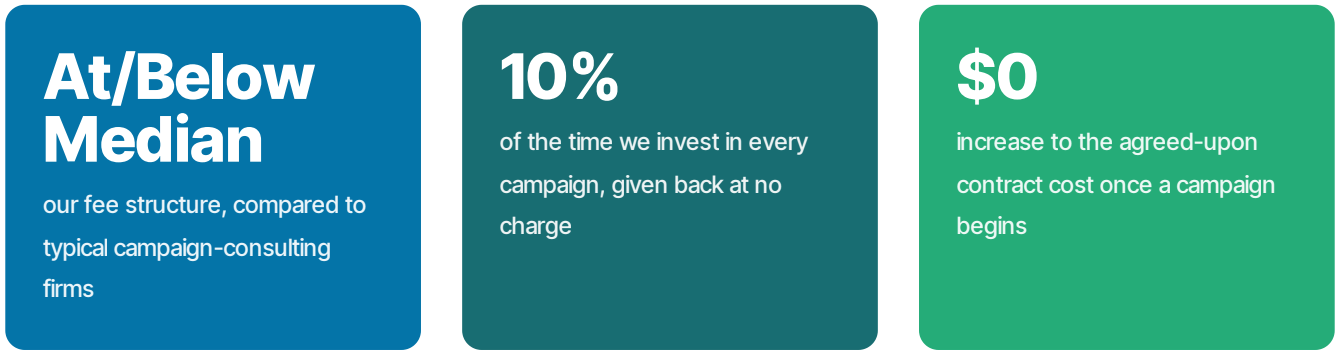
DiPa approaches that uncertainty differently. Once we begin a campaign, we do not increase the agreed-upon contract cost. We understand that campaigns rarely unfold exactly as expected, and we do not believe an organization should be financially penalized because it needs more help than anyone could have predicted at the outset.
“If we are in it, we are in it all the way with you.”
That commitment provides greater financial clarity from the beginning and helps protect the resources intended for the project itself. It also means that our clients do not have to hesitate before asking for help because they are worried that another conversation, meeting, or unexpected challenge will produce another invoice.
Those cost differences matter because the additional money has to come from somewhere.
In most cases, an organization has a finite amount it can responsibly raise, borrow, and spend. Every additional dollar devoted to campaign expenses is a dollar that cannot be used for construction, renovation, furnishings, technology, accessibility improvements, landscaping, or other priorities. When consulting costs rise, the overall project budget does not necessarily rise with them.
WHEN FEES RISE
What Ends Up on the Cutting-Room Floor
That reality often becomes most visible late in the process. The organization has developed its plans, listened to its members, and built enthusiasm around a compelling vision. Then construction pricing is finalized, campaign expenses are accounted for, and leaders discover that the available funds will not cover everything they hoped to accomplish. They are forced to reduce the scope of the project — sometimes by eliminating the very features that helped inspire people to give.
Those reductions might mean:
—
Choosing less durable materials
—
Postponing needed renovations
—
Leaving rooms unfinished
—
Eliminating technology or furnishings
—
Reducing accessibility improvements
—
Removing important ministry spaces from the plan
Each individual decision may seem manageable, but together they can produce a finished project that falls short of the organization’s original vision.
A WORD OF CAUTION
This does not mean that the least expensive consultant is always the wisest choice. Low fees are not a bargain if the organization receives inadequate guidance, generic materials, or insufficient support. The goal is value: experienced, attentive, customized counsel delivered through a cost structure that protects the organization’s larger purpose.
That is the distinction DiPa seeks to provide. We believe organizations should not have to choose between quality and affordability. Our aim is to provide the depth of counsel a major campaign requires while helping clients preserve as much of their financial capacity as possible for the work they are actually called to accomplish.
The cost of campaign counsel should always be considered in relation to the whole project. Before accepting a higher-priced proposal, leaders should ask what that additional expense will provide, whether the stated fee is truly the final cost, and what the added expense might eventually require them to give up.
Because the true cost of paying more is not found only on the consultant’s invoice. It may ultimately be found in the parts of the project that never get built.